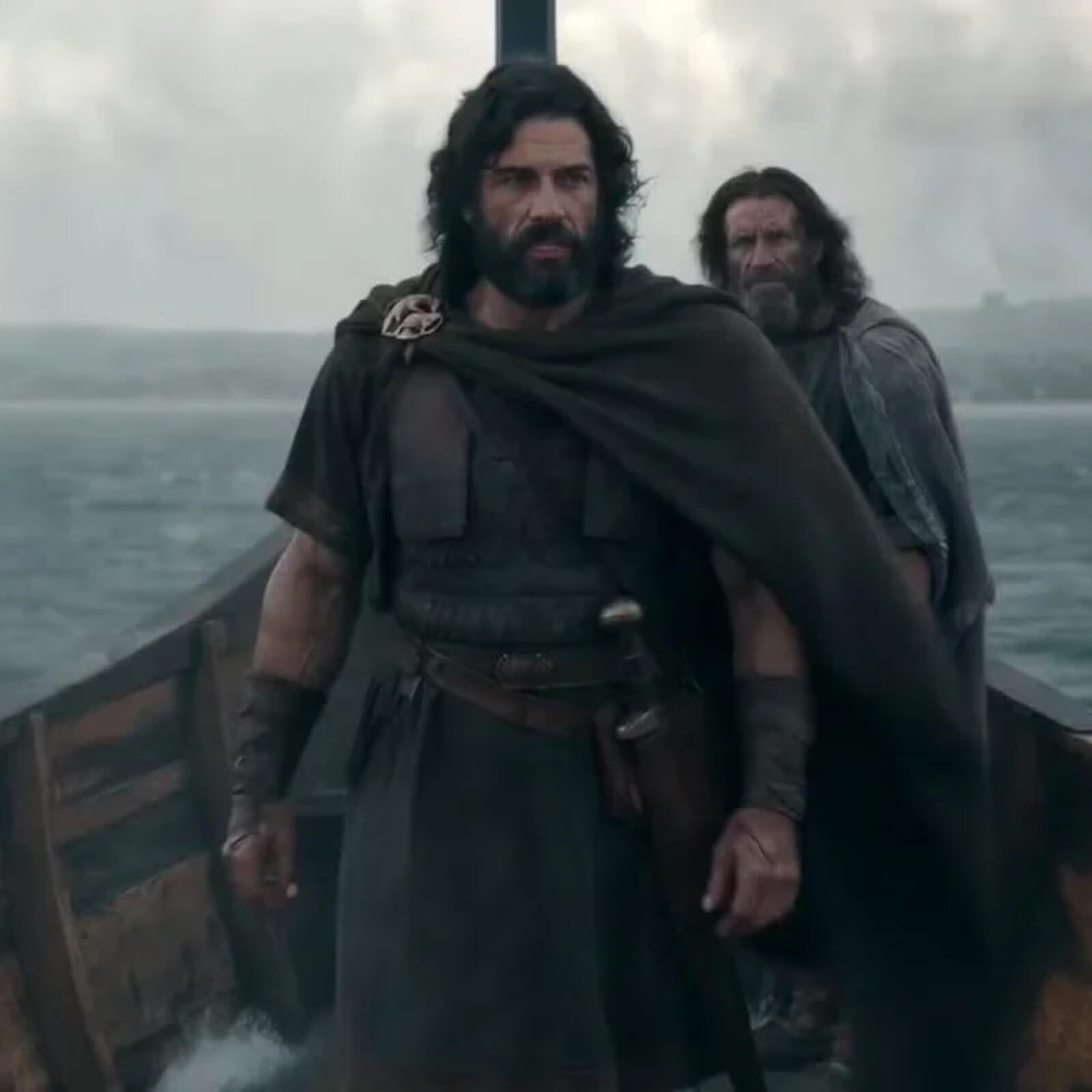
Elon Musk’s 'anti-woke' AI adaptation of Homer’s Odyssey has landed on X to scathing reviews, following his bitter public attacks on Christopher Nolan.
Musk's Grok AI Odyssey Panned as 'Soulless Slop'
Vowing to avenge Christopher Nolan's 'woke' Hollywood blockbuster with an uncompromised algorithmic counterweight, Elon Musk’s generated epic has laid bare the hollow chasm between Silicon Valley vanity and living cinema.
LONDON / SAN FRANCISCO — There is a supreme dramatic irony in attempting to automate Homer. For nearly three millennia, The Odyssey has survived as humanity’s quintessential song of mortality: an epic defined by cracked knuckles, bitter seawater, the sweat of rowers, and the slow, agonizing ache of a mortal man longing for home. To assume such a text could be conquered by feeding prompts into a farm of humming Nvidia processors is precisely the brand of hubris Homer himself used to punish. Also Documented in Archive: PM Modi Lookalike Roasts Kunal Kamra in Viral Clash Profile & Career Dossier
Yet that is what transpired on social media network X, where Elon Musk released the seven-minute opening salvo of an entirely AI-generated adaptation of Homer’s epic. Born out of Musk’s furious public feud with Christopher Nolan—whose physical, 70mm cinematic adaptation amassed nearly $1.8 billion at the global box office—Musk’s alternative was marketed as a culturally pure correction to Hollywood liberalism. Instead, it has been met with near-universal critical derision, branded by international observers as lifeless, stuttering tech sludge.
The Genesis of an Algorithmic Vendetta
The feud began when Nolan’s vast, flesh-and-blood spectacle opened to rapturous acclaim and historic commercial tallies. Musk took to X to denounce the film, zeroing in on Nolan’s ensemble casting—notably Lupita Nyong'o as Helen of Troy and Elliot Page as Sinon—deriding the choices as "diversity quotas" that insulted classical heritage. Related Archival File: Full Biography of Bigg Boss 20 Contestants List 2026, Launch Date
Pledging that his own startup, xAI, alongside partners Wonder Studios and director Dev Walker, would harness the Grok Imagine engine to deliver a "historically truthful" vision before year’s end, Musk framed the enterprise as a technological strike against studio self-indulgence.
“Musk's Odyssey doesn’t possess the living breath of drama; it has the glassy, anxious perfection of an animated corporate presentation running on loop in an empty lobby.”
What arrived on screens, however, was not antiquity restored, but the familiar uncanny valley of generative software. As critics across The Guardian and The Telegraph noted in blistering post-mortems, the characters do not interact; they float. Facial structures subtly drift and warp between camera transitions. Bronze breastplates mutate into biological leather mid-stride, and the vocal delivery—processed through synthetic modulation—lacks the fundamental cadence of human longing or fear.
The Misunderstanding of Christopher Nolan
Musk’s tactical miscalculation rests on a fundamental misreading of Nolan’s appeal. For three decades, Nolan has operated as the ultimate materialist in modern cinema: an obsessive craftsman who detonates physical aircraft, builds functional scale miniatures, and shoots on massive analog photochemical emulsion specifically to resist digital intangibility.
To counter a filmmaker whose religion is the tangible grain of physical light with a browser-based generative demo was fundamentally mismatched. Audiences flock to Nolan not for ideological compliance, but for the visceral knowledge that hundreds of artists stood in real dirt under real sunlight to capture a fleeting moment of human performance.
The Shifting Identity: In generative video, temporal coherence remains fractured. The face of Odysseus subtly alters its bone structure with every angle change, depriving the viewer of an empathetic anchor.
The Dead-Eyed Gaze: While prompt engines can replicate neoclassical armor textures, they cannot generate intent. The synthetic actors deliver ancient verses with the blank neutrality of GPS navigation prompts.
The "Screensaver" Verdict: Without human rhythm or spatial resistance, the sweeping panoramic battle scenes dissolve into glittering, weightless desktop wallpaper.
The Broader Lesson for Digital Culture
The failure of Musk’s counter-offensive is instructive for the future of entertainment. For months, venture capital cheerleaders have predicted that generative text-to-video pipelines would immediately render Hollywood crews, writers, and directors obsolete.
What this episode proves is that cinema is not merely an assembly of high-resolution images assembled in sequence; it is a shared dialect of human intent, friction, and resistance. By reducing storytelling to a tool of ideological spite and machine synthesis, xAI demonstrated what cinema becomes when the human being is excised: technically ornate, endlessly reproducible, and utterly forgettable.
Digital PR Editor & Creator Economy Lead • Delhi & Mumbai Bureau. Verified biographical research cross-checked against production archives.